Source 8gb ddr4 memory for desktop laptop and server
Compare 30 listings of 8gb ddr4 memory for desktop, laptop, and server applications. Buyers can review specifications including frequency, voltage, and capacity from verified suppliers offering customization and blister packaging options.
Key considerations
Products List




Comprehensive Sourcing Guide
Strategic Sourcing Guide for 8GB DDR4 Desktop Memory Solutions
Navigating the procurement landscape for 8GB DDR4 memory modules designed for desktop applications requires a disciplined approach that balances technical compatibility, supply chain reliability, and cost efficiency. While the core keyword focuses on a specific capacity and generation, the actual market offerings often present a complex matrix of variations in voltage, frequency, and form factor. Buyers must rely on verified product attributes rather than generalized marketing claims to ensure successful integration. This guide outlines the critical factors for sourcing these components, drawing upon observed market data and established industry standards to provide a robust framework for decision-making.
Technical Specifications and Compatibility Verification
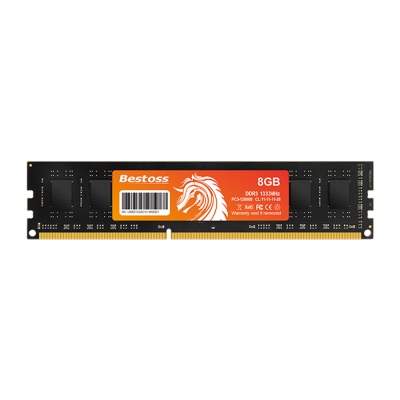
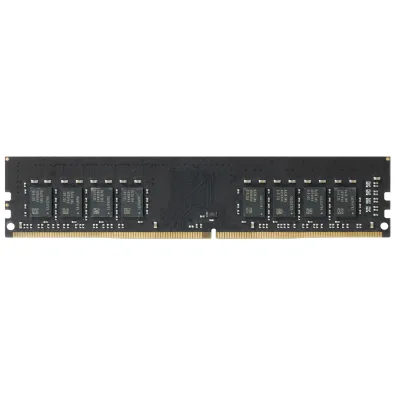
The foundation of any successful procurement for DDR4 desktop memory lies in precise technical verification. The term "DDR4" denotes a specific generation of Double Data Rate Synchronous Dynamic Random-Access Memory, which operates with distinct electrical characteristics compared to its predecessors. In the observed market, specific models such as the 16GB NBDDR4 2666MHz and 32GB DDR4 2666MHz indicate that frequency and capacity are variable parameters that must be matched to the host system's motherboard capabilities. For an 8GB requirement, buyers should verify that the module supports the standard DDR4 interface form, typically identified as DIMM (Dual In-line Memory Module) with a 240-pin configuration.
Voltage is a critical differentiator that impacts system stability and power consumption. Observed data indicates that DDR4 modules in this category often operate at 1.2V, while other variants may support a range of 1.35V/1.5V. Selecting the correct voltage is essential; a module designed for 1.35V might not function correctly on a motherboard expecting 1.2V, or vice versa, depending on the BIOS configuration and power delivery capabilities. Furthermore, frequency specifications such as 800MHz or 1333MHz (often referring to data rates in MHz or MT/s) must align with the system's supported speeds. While some listings mention "SDRAM" or "DRAM" operate modes, the specific DDR4 standard implies a synchronous operation mode that is distinct from older asynchronous types.
Physical dimensions also play a role in compatibility, particularly for compact desktop cases or specialized form factors. Standard desktop DIMM modules generally adhere to a size profile around 133mm in length, with widths near 31mm and thicknesses ranging from 1.5mm to 2mm. Specific observed dimensions include 133311.5mm and 133.35X31.25X2mm. Buyers must ensure the physical footprint of the purchased module fits within the allocated DIMM slots on the target motherboard without obstructing adjacent components like CPU coolers or PCIe cards.
Compliance, Certification, and Standard Adherence
When sourcing memory components, verifying adherence to industry standards is paramount to ensure long-term reliability and interoperability. The provided data references standards such as "DDR4 For Laptop/Notebook" and "PCB Board" specifications, but for desktop applications, the focus must shift to the JEDEC (Joint Electron Device Engineering Council) standards that govern DDR4 electrical and mechanical specifications. While specific certification bodies are not explicitly named in the general product listings, buyers should insist on documentation confirming compliance with relevant JEDEC standards for DDR4.
The "prod_standard" field in observed listings varies, with entries like "Server DDR3 RAM" or "82g" (likely a weight or internal code) appearing alongside standard designations. This variance highlights the importance of distinguishing between server-grade and desktop-grade components. Server memory often includes features like Error Correction Code (ECC), which is noted in the observed attributes as "Automatic Error Correction." However, standard desktop DDR4 modules typically do not include ECC unless explicitly specified. Buyers must verify whether the 8GB module requires ECC support based on the intended application; standard desktop systems usually operate with non-ECC memory, while server or workstation applications may mandate it.
Additionally, the "Normal Packing" and "Blister Package" observations suggest that packaging standards are consistent across many suppliers, but this does not guarantee internal component quality. Buyers should request test reports or compliance certificates that verify the PCB material quality, solder joint integrity, and the authenticity of the memory chips used. Without explicit certification data in the general listings, the procurement strategy must include a requirement for the supplier to provide proof of standard adherence before finalizing the order.
Cost Drivers and Pricing Dynamics
Understanding the cost structure of DDR4 memory is essential for budgeting and negotiation. The observed price range in the market spans from $1.95 to $183 USD, a wide disparity that reflects differences in capacity, brand, frequency, and included features like cooling solutions. For an 8GB module, the price is likely to fall on the lower to mid-end of this spectrum, but buyers should be wary of prices that seem anomalously low, as they may indicate refurbished units, counterfeit chips, or substandard components.
Several factors drive the final cost of the memory module. Capacity is the most obvious driver, but frequency and latency also significantly impact pricing. Higher frequency modules, such as those operating at 2666MHz or above, typically command a premium over lower-speed variants. The presence of a "Cooling Fin" is another cost driver; while some desktop applications do not require active cooling, modules with integrated heat spreaders or fins are priced higher due to the added materials and manufacturing complexity. The observed data mentions "Within Cooling Fin" and "With Cooling Fin" as attributes, indicating that thermal management features are a variable cost component.
Volume is another critical cost factor. The observed Minimum Order Quantity (MOQ) ranges from 20 to 1000 units. Buyers purchasing smaller quantities may face higher per-unit costs or be unable to meet the MOQ requirements of certain suppliers. Conversely, bulk orders often benefit from economies of scale, reducing the unit price. However, the lead time for orders above 1,000 units may require confirmation with the supplier, potentially delaying the procurement cycle. Buyers must balance the need for immediate inventory against the cost savings of larger orders.
Typical Applications and Use Case Scenarios
The application of 8GB DDR4 memory extends beyond simple desktop computing. While the core keyword specifies "desktop," the observed data reveals that similar modules are marketed for "Laptop," "Server," and "Desktop" applications. This overlap necessitates careful selection to ensure the memory is optimized for the specific use case. For general desktop use, such as office productivity, web browsing, and media consumption, standard non-ECC DDR4 modules are sufficient. These applications prioritize cost-effectiveness and compatibility over high-performance error correction.
In contrast, server applications often demand higher reliability and the "Automatic Error Correction" feature observed in some listings. If the 8GB module is intended for a desktop workstation used for video editing, 3D rendering, or scientific computing, the performance metrics become more critical. Attributes such as "4kb Random Read: up to 7400iops" and "4kb Random Write: up to 6300 Iops" suggest high-performance capabilities, though these figures are more commonly associated with SSDs than RAM. For memory, the focus should be on bandwidth and latency. Buyers should verify that the module's frequency and timing specifications meet the demands of their specific software workloads.
The "Operating Temperature" range of 0~85°c is a standard specification that ensures the memory can function in various environmental conditions. This range is suitable for most indoor desktop environments, but buyers deploying systems in extreme conditions should verify the thermal limits of the specific module. The "Condition: Brand New" attribute is a baseline expectation, but in the context of desktop upgrades, buyers should also consider the compatibility with existing system architectures, particularly regarding the motherboard's supported memory generation and maximum capacity.
Supplier Evaluation and Sourcing Strategy
Evaluating suppliers for DDR4 memory requires a rigorous assessment of their capabilities, reliability, and transparency. The observed data indicates that suppliers offer various shipping terms, including "DHL/UPS/TNT/EMS/FedEx/by Sea," which provides flexibility for different urgency levels and budget constraints. Payment methods such as "T/T, Western Union, Paypal" are standard, but buyers should prioritize secure payment channels that offer buyer protection.
Lead time is a critical factor in supplier evaluation. The observed lead time of "Below 1K: 3-5days, Above 1K Confirm with Us" suggests that small orders can be fulfilled quickly, while larger orders require additional coordination. Buyers should verify the supplier's ability to meet their specific timeline requirements, especially if the procurement is time-sensitive. The "OEM: Yes" attribute indicates that suppliers may offer customization services, which can be valuable for buyers with specific branding or packaging requirements.
When evaluating suppliers, buyers should look for evidence of quality control processes and the ability to provide technical support. The "Method of Payment" and "Shipping Terms" should be clearly defined in the contract to avoid disputes. Additionally, the "prod_origin: China" observation highlights the geographical concentration of the supply chain, which buyers should factor into their risk management strategy, including potential geopolitical or logistical disruptions.
Quality Control and Long-Term Procurement Considerations
Ensuring the quality of DDR4 memory modules is essential for preventing system failures and data loss. The observed attributes include "Weight: 10g" or "12g," which can serve as a basic verification metric; significant deviations from these weights may indicate counterfeit or substandard components. Buyers should implement a quality control protocol that includes visual inspection of the PCB, verification of the chip markings, and testing of the module's functionality upon receipt.
Long-term procurement considerations involve building a relationship with reliable suppliers who can provide consistent quality and support. The "Normal Packing: Blister Package" suggests a standard packaging method, but buyers should ensure that the packaging provides adequate protection against static electricity and physical damage during transit. For ongoing procurement, buyers should consider the availability of spare parts and the supplier's ability to support future upgrades or replacements.
Finally, buyers should monitor the market for changes in technology and pricing. As DDR5 becomes more prevalent, the supply and pricing of DDR4 modules may shift. Buyers planning long-term deployments should assess the lifecycle of DDR4 technology and ensure that their procurement strategy aligns with the expected longevity of their systems. By adhering to these guidelines and leveraging the observed market data, buyers can make informed decisions that optimize performance, cost, and reliability for their desktop memory needs.
FAQs
What is the typical lead time for small orders of this memory?
The lead time for orders below 1,000 units is typically 3 to 5 days. For quantities exceeding this threshold, the timeline requires direct confirmation with the supplier to ensure accurate scheduling.
Which voltage levels are supported by these DDR4 modules?
These modules operate at 1.2V or support a range of 1.35V to 1.5V depending on the specific model. Buyers must verify the exact voltage requirement matches their motherboard capabilities to ensure system stability.
Can I find these memory modules with automatic error correction?
Yes, some available models feature automatic error correction performance. This feature is often found in server-grade variants, so buyers should confirm the specific product standard matches their application needs.
What is the minimum order quantity for purchasing this memory?
The minimum order quantity ranges from 20 to 1,000 units across different suppliers. Buyers should check individual listings to find options that fit their specific volume requirements and budget constraints.
How are these memory modules typically packaged for shipping?
The standard packaging for these products is a blister package. This method ensures protection during transit, though buyers should verify if additional protective measures are available for bulk orders.
Which shipping methods are available for delivering these components?
Available shipping terms include DHL, UPS, TNT, EMS, FedEx, and sea freight. Buyers can select the method that best balances speed and cost based on their location and urgency.
What are the physical dimensions of the standard desktop module?
Standard desktop modules have dimensions around 133mm in length, 31mm in width, and 1.5mm to 2mm in thickness. Specific observed sizes include 133x31x1.5mm and 133.35x31.25x2mm.